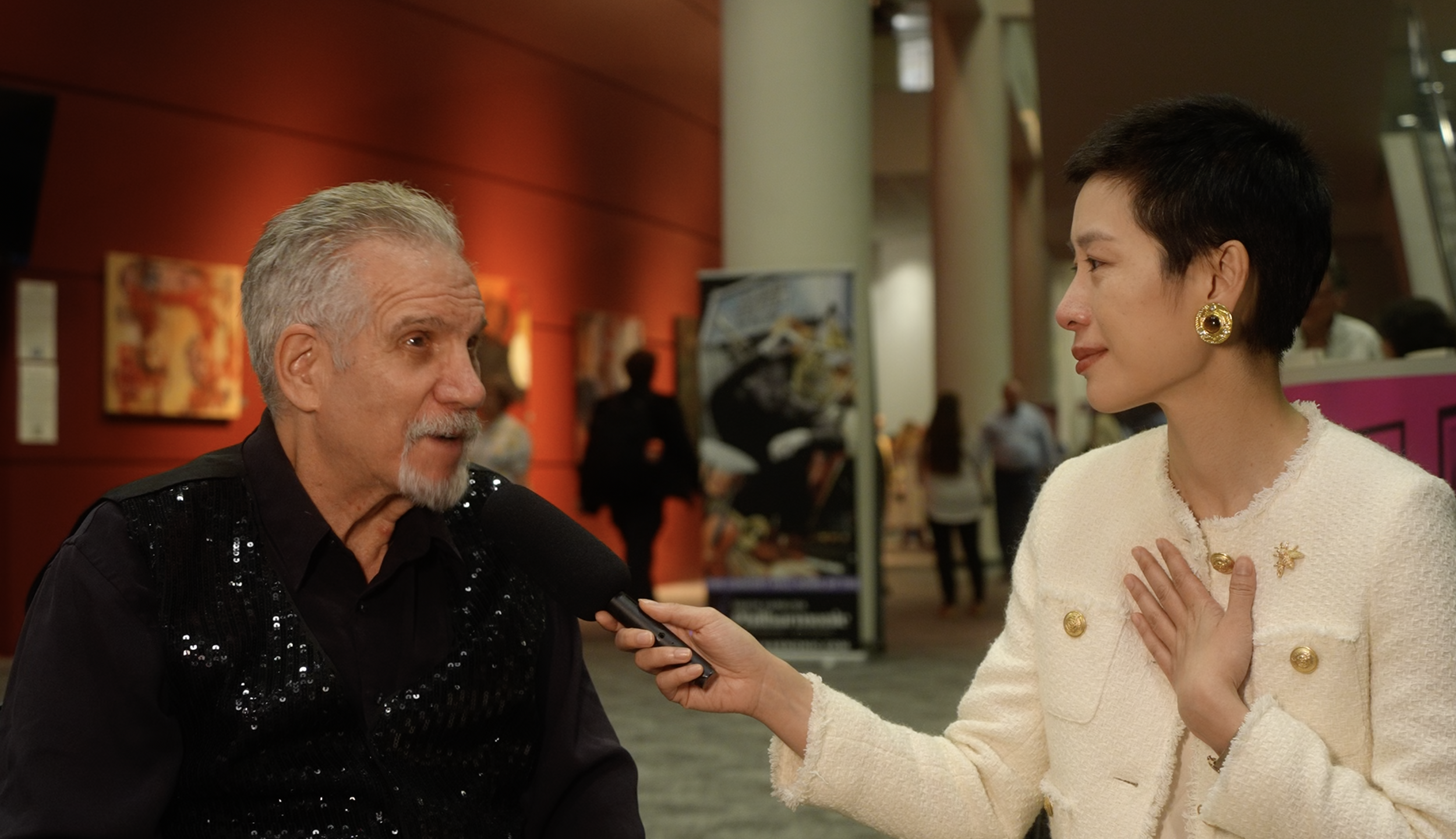
Alan Glassman: What Does an Opera Artist Hope to Leave Behind After the Curtain Falls?
Honor River Story Archive | People & Stories
Interviewee: Alan Glassman
Interviewer: Yili Fan
Produced by: Honor River Media
Location: South Carolina, USA
Date: 2026
Introduction
When we sat down with Alan Glassman, we weren't looking for another success story.
His achievements are already well known. More than 200 performances at the Metropolitan Opera. Fifty-four years devoted to opera. A career that has taken him across the world.
But behind every legendary artist is an ordinary human life.
Beyond the stage are moments of doubt, family, loss, gratitude, teaching, and the quiet search for meaning.
This conversation is about that life.
"I Never Wanted Fame. I Wanted to Become a Great Singer."
Yili Fan
People know Alan Glassman as one of America's great opera singers.
But if you were introducing yourself—not as an opera star, but simply as a person—who is Alan Glassman?
Alan Glassman
I'm originally from New York City, and I've been singing opera for fifty-four years.
I've been fortunate enough to perform around the world, including more than two hundred performances at the Metropolitan Opera.
Looking back, I feel incredibly lucky.
These days, another part of my life has become just as important as performing.
I mentor young singers—not only helping them develop their voices, but helping them find confidence, purpose, and direction.
I believe that whatever gifts life gives us become meaningful only when we pass them on.
"I'm Beginning Another Chapter."
Yili Fan
Many people admire your remarkable career.
But from the inside, after more than half a century on stage, what does this life actually feel like?
Alan Glassman
I simply keep moving forward.
I don't want to stop.
As long as I can honestly sing, I'll continue.
When the day comes that my voice tells me it's time to stop, I'll know.
Until then, I want to keep singing, teaching, traveling, and meeting people.
Recently I left the university where I had been teaching in Chicago for fourteen years.
I moved to Las Vegas, where I'm discovering a new chapter of my life.
I'm performing different kinds of productions, enjoying theater again, and looking forward to traveling more.
One place I've wanted to visit for years is China.
I was supposed to go before COVID, but the trip never happened.
I still hope to visit soon.
I've worked with many Chinese singers in America, and I admire them deeply.
They are among the hardest-working artists I've ever met.
"My Teacher Changed My Entire Life."
Alan's story began long before the Metropolitan Opera.
At seven years old, a guitar teacher unexpectedly asked him to sing.
The teacher immediately put the guitar aside.
"Where did you get that voice?" he asked.
From that moment, Alan's life changed.
At eight years old, he was accepted into the Juilliard School's Pre-College Division—an opportunity almost unheard of for a child his age.
There, he spent nearly a decade studying music theory, piano, languages, and performance while continuing regular public school.
"I never dreamed about becoming famous," Alan says.
"I wanted to become a truly great singer."
"Every Artist Needs Someone Who Believes First."
Throughout the conversation, Alan returned repeatedly to one person—his teacher.
At nineteen, his teacher gave him an opportunity that changed everything.
Instead of performing himself, the teacher stepped aside and arranged for Alan to make his Carnegie Hall debut.
"He believed in me before I believed in myself."
Today, Alan tries to offer that same gift to younger generations.
"I don't just teach singing.
I mentor people.
Someone once opened a door for me.
Now it's my turn to open doors for others."
"The Audience Doesn't Remember Perfect Notes."
Speaking about performance, Alan rejects the pursuit of perfection.
"There is no such thing as perfection," he says.
"In an entire career, maybe five performances truly feel perfect to the performer."
Instead, he believes every performance should pursue something deeper.
"I want people to feel something.
If people leave the theater feeling nothing, then it doesn't matter how beautifully I sang."
"Loss Becomes Part of Every Artist."
One of the most emotional moments of our conversation came when Alan spoke about his parents.
He described sitting beside his father's hospital bed before his final performance.
He remembered trying to comfort him.
He also recalled standing at both of his parents' funerals, unable to finish the songs he had hoped to sing.
For Alan, music is no longer simply performance.
Every important person in his life now lives inside certain songs.
Loss, he says, never truly disappears.
It quietly becomes part of every performance that follows.
"A Character Always Begins with Myself."
As both an opera performer and actor, Alan has portrayed more than 150 different roles.
When asked how he approaches a new character, his answer was surprisingly simple.
"I always begin with myself."
He studies the script carefully.
He searches for one physical gesture.
One movement.
One feeling.
One human truth.
"I always bring a part of myself into every character.
Otherwise, the audience cannot believe the performance."
"Life Is Still Beginning."
At an age when many performers retire, Alan speaks not about endings, but beginnings.
He hopes to continue traveling.
Continue teaching.
Continue acting.
Continue discovering.
"I'm starting another chapter."
For him, the stage has never simply been a place to sing.
It has always been a place to understand people.
And perhaps that is what remains after the curtain falls—not applause, not awards, but the lives we have touched along the way.
Honor River Story Archive
"Every life is a story worth preserving."